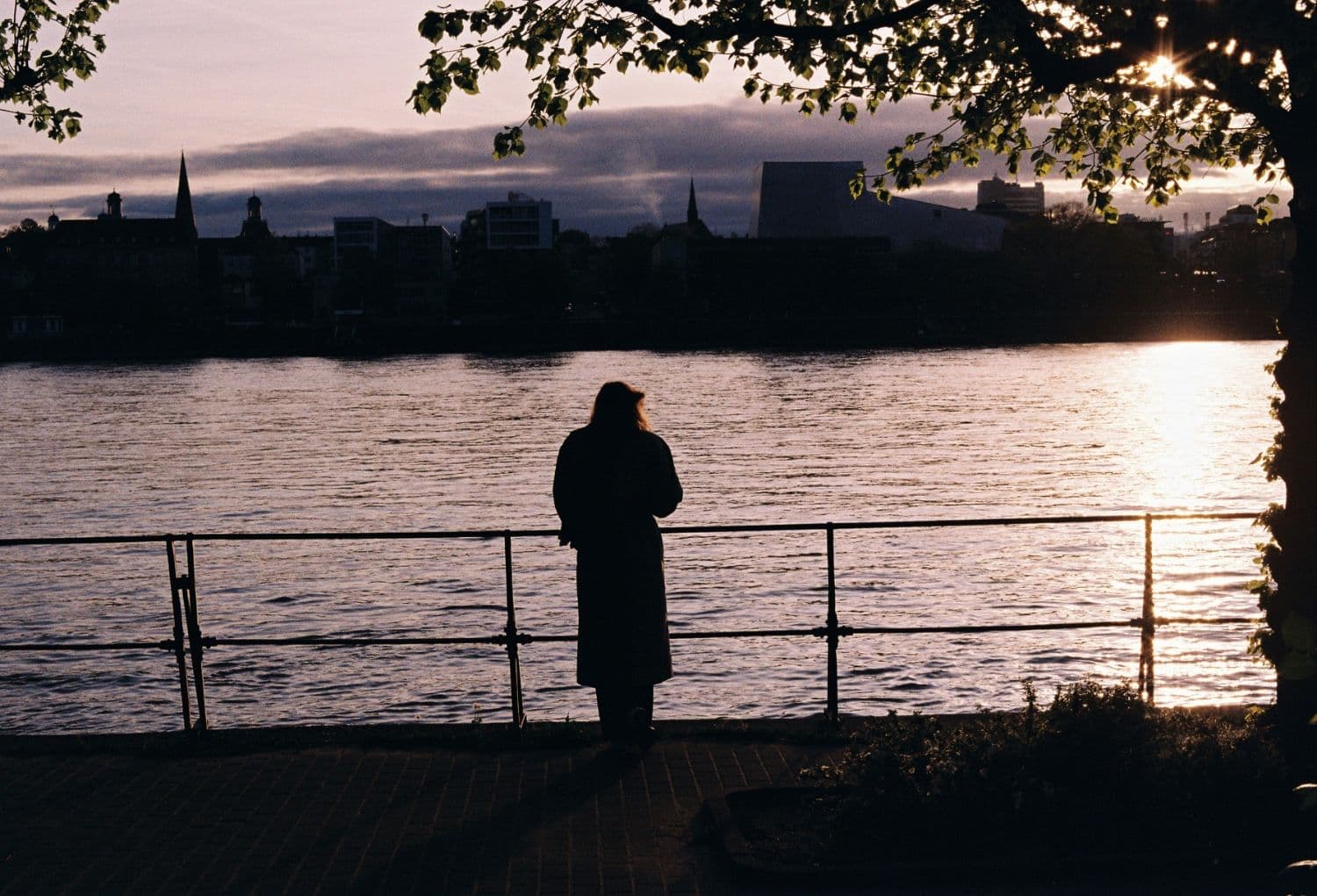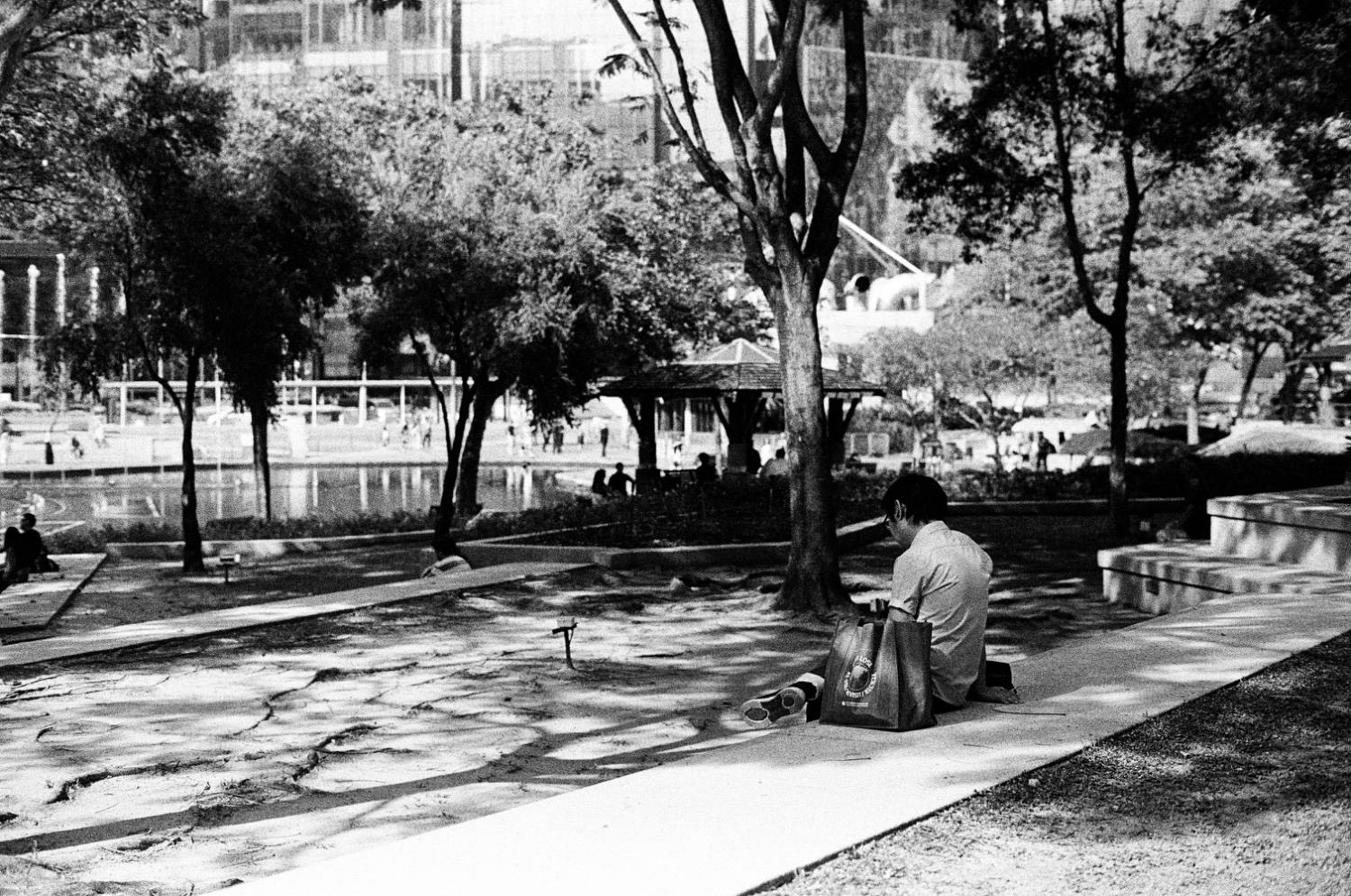
There are periods in life when it feels as though we have pressed the pause button. Thoughts like these may begin to surface:
“I feel like I am not moving forward.”
“I am no longer who I was, but I do not know who I want to become.”
“Everything feels stuck.”
“I am waiting for something to happen, but I do not know what.”
Some people rush into a new relationship simply to avoid feeling lonely. Others fill their schedules so that they do not have to come into contact with the emptiness. Some keep searching for answers, advice, or “the right decision”, hoping that certainty will make the discomfort disappear.
But human change does not always work that way.
In Gestalt therapy, there is a concept that describes something of this space between the old and the new: the fertile void.
Two words that seem almost contradictory.
Void points to absence, to something that is missing. Fertile, on the other hand, points towards something that is creating, something that is taking shape beneath the surface.
The fertile void is the period in which an old way of being has run its course, while the next one has not yet taken shape.
The moment before the new form emerges
Gestalt theory understands the person as continuously engaged in a process of contact and adjustment with their environment. But adjustment is not merely passive adaptation. Human beings continually find and create new ways of existing and relating.
Fritz Perls, Ralph Hefferline and Paul Goodman, the authors of Gestalt Therapy and key figures in the development of Gestalt therapy, described this process in terms of creative adjustment: the ways in which we respond to the conditions of our environment while also finding new possibilities for meeting our needs.
This does not concern only major life decisions.
It can be:
- the way we learn to ask our partner for what we need instead of waiting for them to guess;
- the way we stop apologising for having needs;
- the way we reorganise our lives after a significant change;
- the way we learn to say, “I do not know yet.”
The fertile void is the period in which an old way of being has stopped serving us, while a new one has not yet emerged.
Why it is so difficult to stay with “I do not know”
As human beings, we have a deep need for orientation and predictability. Our minds are constantly trying to anticipate what will happen next. Uncertainty can increase arousal and create a strong urge to do something—not necessarily because that action is right, but because taking action can temporarily relieve the discomfort of not knowing.
This may be one reason why we sometimes prefer a hasty decision to uncertainty. Even when a decision later turns out not to have been the best one, it may provide immediate relief because it gives us a sense that we are taking back some control.
Action can be creative.
But action can also become a way of avoiding contact with something difficult.
The fertile void needs support. It does not mean simply sitting still and waiting for something to happen. It requires conditions in which a person can remain in contact with their experience without being pushed prematurely towards a solution.
It may mean having a body that is able to rest. It may mean having people who can accompany us without immediately trying to solve the problem. Perhaps a friend who can listen without saying, “Just move on.” Perhaps a therapist who does not rush to find answers for us, but can stay alongside us in the uncertainty of “I do not know yet.”
Sometimes the greatest support is not having someone show us the way, but having someone stay beside us until we begin to find it ourselves.
It also means drawing on experiences that have taught us that we can move through difficult periods without falling apart.
Just as we cannot pull at a seed to make it grow faster, many human transitions need time, space, and the right conditions in order to unfold.
The difficult part is not always the leap
We often speak about the courage of change: the decision to leave, to speak, to ask for something, to claim what we need.
But there is another, quieter part of change that receives less attention: what comes afterwards.
When we have done what we could and no longer have control over the outcome.
We send a message we have been putting off for a long time and do not know how the other person will respond.
We leave a job without having found the next one.
We make an important decision and can no longer take it back.
We close a door without knowing which one will open next.
This is where the fertile void can emerge.
The more we pressure ourselves to find all the answers immediately, the more likely we may be to return to old ways of being which, familiar as they are, no longer serve us.
The new form cannot always be forced into existence.
It emerges gradually—through experience, awareness, and our ongoing relationship with the environment.
Not the absence of life, but the preparation for what comes next
The philosopher Martin Heidegger explored the human capacity to remain open to what is not yet known, rather than immediately reducing uncertainty to ready-made answers. Perhaps this points to one of the more difficult human tasks: learning not to fill every emptiness immediately.
To leave some space.
To allow something new to emerge before we know exactly what it is.
The fertile void is not the absence of life.
It is the space in which something old gradually gives way to something new, before we are yet able to name what is coming.
It is the moment before life finds its next form of expression.
Most people are not afraid only of the unknown. They are also afraid that this in-between might never end.
That they might remain forever without direction, without answers, or without meaning.
And yet, very often, it is precisely this period—uncomfortable and uncertain as it may be—that becomes the ground from which a new way of being begins to take shape.
Sometimes, nothing needs to be decided yet.
Sometimes, we need to remain present long enough for the next form to find us.