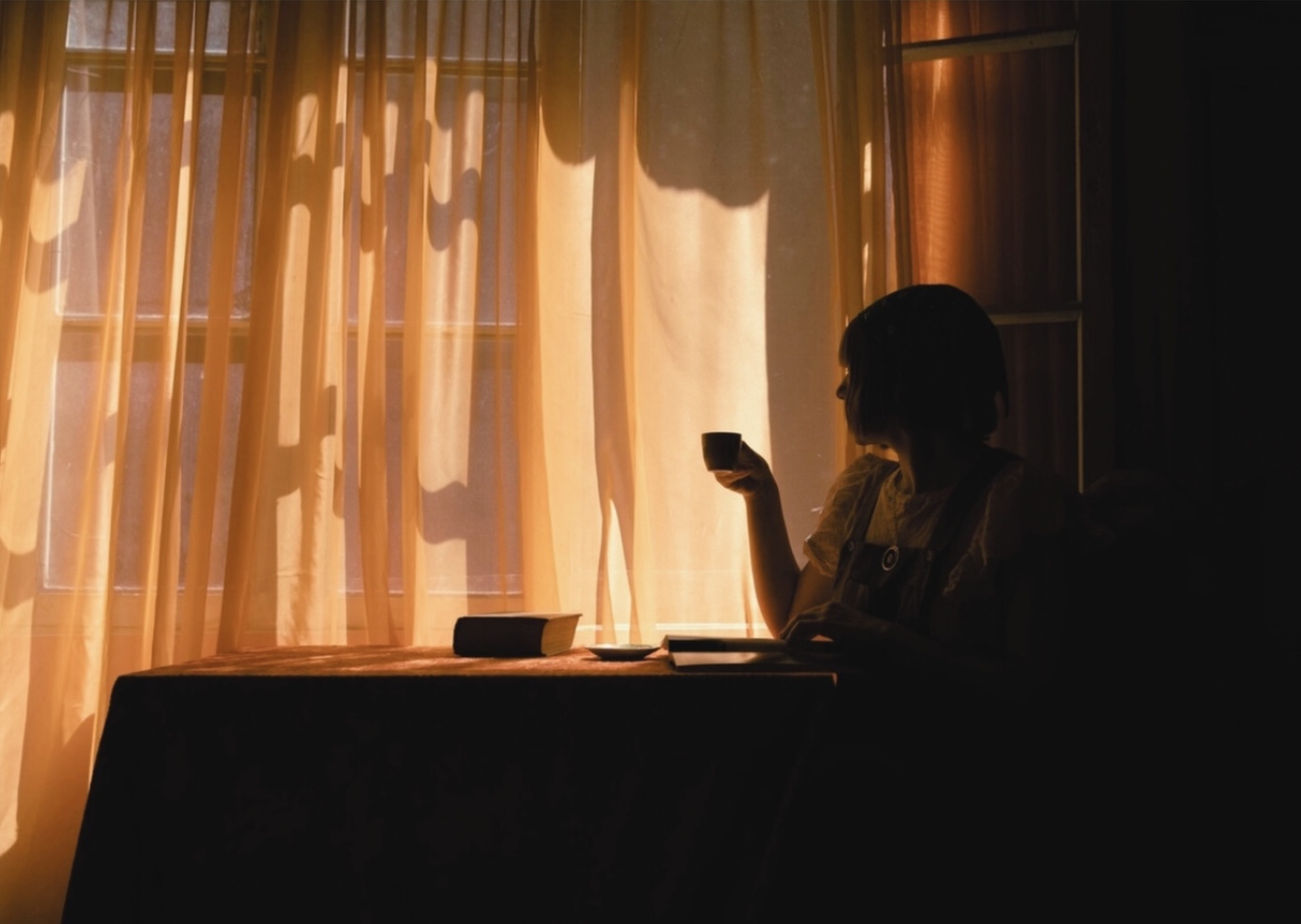
I often hear people say “I’m an anxious person”, or “I’m a prisoner of my fear”, or “I have no patience” — as though feelings such as despair, fear, anxiety and anger were parts of our identity. We say “I am desperate”, as if that feeling were a permanent and total experience, touching and flooding our whole existence. But if we look through the eyes of neuroscience and Gestalt psychotherapy, we see something different: we are not our fear, our anxiety or our despair. It is simply that, at that moment, our organism is reproducing a pattern — a way it has learned to observe and translate the world.
When we get lost in thought and leave the present, a network is activated that increases the likelihood of our operating according to the voices and the “shoulds” we adopted from our environment while growing up about what matters. This happens because the brain, as an organ, evolved to keep us alive and safe, not happy or calm. So when this mode dominates, we become trapped in an inner monologue and a way of being that disconnects us from real contact with the world and everything else it contains. When we repeatedly focus on self-criticism, threats or fears, the same neural networks in the brain are activated; they are thereby strengthened and fire more quickly, at the expense of alternative networks. The same happens with imagination: every time we think of something we activate the corresponding neural networks, with the body responding to that experience as though we were living it.
Moreover, our brain works by organising what we live into figures — like particular forms we notice in a painting. These are stimuli that for some reason are important to us at a given moment and that we distinguish against a ground of available stimuli that exist but that we do not focus on. The figures that draw our attention are not random. They are connected with the environment we are in, the needs of our organism, previous traumas, and the degree of awareness and emotional regulation of the present moment.
When we are in a state of stress, the brain brings forward as figures mainly potential threats, everything it identifies as dangerous. All the beautiful, supportive or nourishing elements of life recede into the ground and become almost invisible. Our experience thus becomes one-dimensional and our self-regulation is blocked.
To break this cycle, we do not need to “correct” our thoughts, but to bring our awareness to our senses. One experiment we can try is to name something we feel grateful for. Even conscious contact with the taste of our morning coffee, or the feeling of the sun on our face, can be enough. Usually when we operate mechanically, our senses — the ways we have as an organism of receiving and coming into contact with our environment — are blocked. This is why it matters to stay bodily with the sensation we are focusing on for around three minutes, so that the neural connections of the present experience begin to be built and can be registered and assimilated.
This small episode of satisfaction and appreciation activates a circuit in the brain that contributes to the release of hormones of satisfaction and of a sense of safety. This is not about false or toxic positivity, but about the conscious choice to offer our organism a new focus on our senses and the opportunity to recover its balance. If we begin to do this for three minutes a day, we learn to train our brain to focus on other realities that also exist and that we usually ignore. This practice does not replace therapeutic work in cases of trauma or severe depression, but it works as a small intervention for regulation and for strengthening awareness.
Every time I choose contact with present experience instead of ruminating on fearful thoughts, I build or strengthen a new neural pathway. By coming into contact with our senses we regulate ourselves and actively create a new biological reality. The exercise is not simply the passive recognition of what I am experiencing, but an act of creating meaning out of the small things I can feel grateful for.
Despair or anxiety are particular routes of neural activation, not fixed states of the self or of personality. Neuroscience tells us that we have the power to change this structure through contact with the here and now, so that the organism begins to shift its focus. Authentic experience consists in sensory contact — and hormones are released not because we are drinking a good coffee but because we paused and focused on tasting it, and for the brain that makes a difference. When we switch off the autopilot, even for a few minutes, the network that identifies what is important registers that something positive and pleasant is happening here and now.
If our brain can change, then we are not condemned to our past. By taking a different position towards automaticity, we take responsibility for our stance and our perspective.