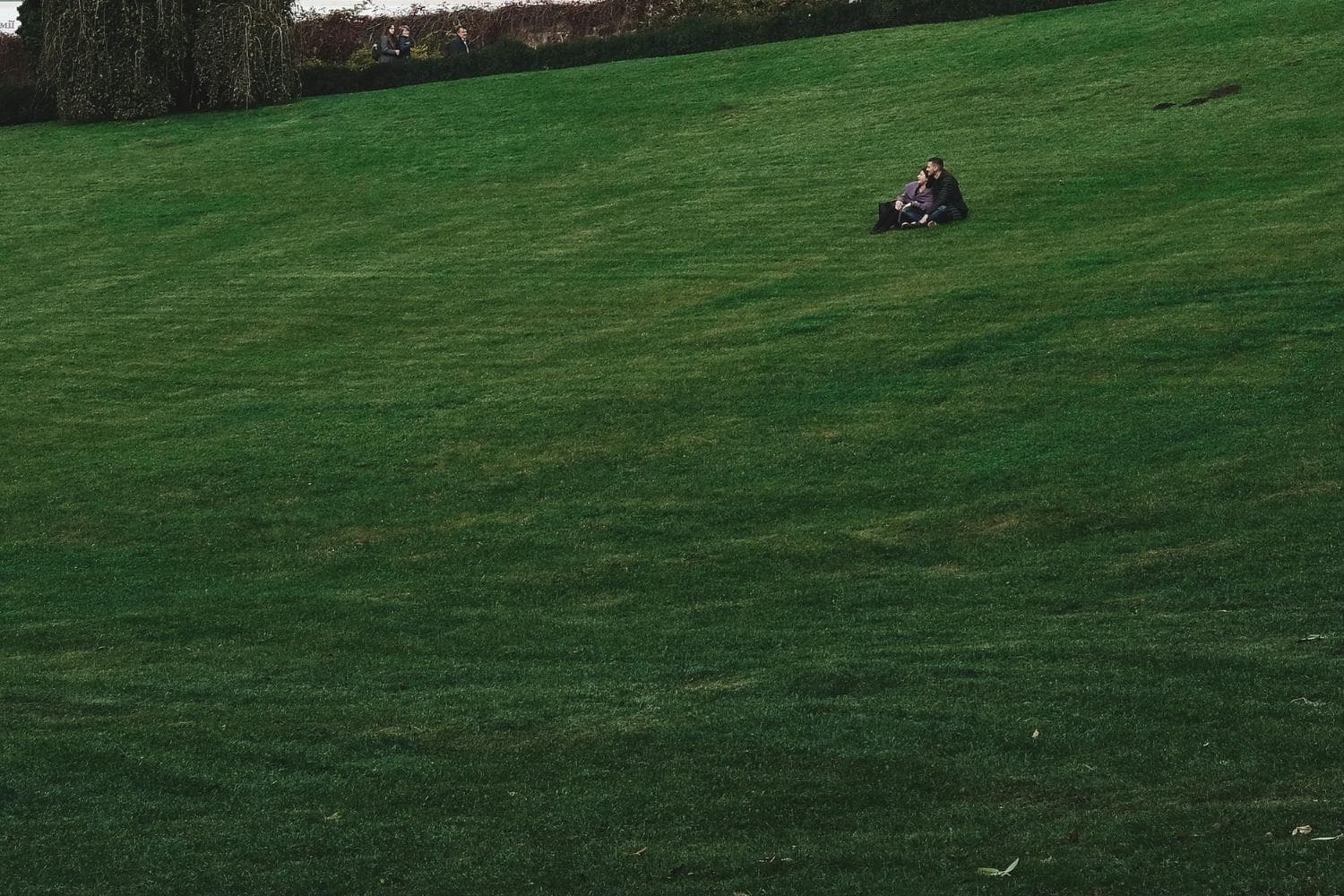
There are moments when we imagine what it would have been like if we had chosen something other than what we chose. The fantasy of parallel lives compares our reality with an idealised version we never actually lived long enough to de-idealise. Small losses accompany every significant decision in our lives.
Whatever decision we make, it is almost certain that there will be moments when we question it. Moments when we wonder whether we did the “right” thing, whether it would have been better to choose differently. This holds whether it is about a holiday, a relationship, a job, a city, a house or a friendship.
Often a small grief rises in us for the possibility we did not take up, for the road we did not follow, for the life that could have taken another turn. Many people become trapped in the constant search for the “right” choice: the one with the fewest drawbacks, the lowest cost and the greatest benefits. Except that such a choice does not exist.
Why there is no “right” decision
Every decision inevitably has a cost. Choosing something means at the same time not choosing something else. Committing to one road means saying goodbye to all the others we might have taken. My beloved Irvin Yalom describes how every choice simultaneously entails renouncing other possibilities, and how every “yes” is at the same time a “no” (Yalom, 1980).
It is no accident that the word itself reveals its hidden meanings. The Latin verb decidere — from which the English “decide” comes — shares its ending with words such as homicide: a root meaning “to cut, to cut off”. Every time we decide, in a sense we cut off the other roads. A decision is not only a choice; it is also a small farewell.
If I choose to leave, one day I may grieve for what I left behind. If I choose to stay, I may grieve for the possibilities, the freedom and the experiences I will never know. Whichever road I take, some form of loss will accompany it. This is not misfortune or miscalculation, but the very nature of choosing as a finite human being, living within a particular body, time and life.
When the search for the perfect choice becomes self-sabotage
Imagine someone who has to decide whether to accept a job in another city. He makes lists of pros and cons, remakes them, asks everyone, reads, calculates. Every time he comes close to a decision, a “yes, but” appears. Weeks pass. What torments him is not so much the choice itself as the idea that if he takes every parameter into account, somewhere out there is the perfect option. And so he remains suspended, exhausted by all the possible scenarios and, of course, immobilised.
Research has a name for this way of deciding: it calls it maximizing. People who always look for the optimal possible choice, as opposed to those who settle for one that is “good enough”, tend to feel greater regret, less satisfaction with their decisions and more pressure — even when they objectively choose well (Schwartz et al., 2002). The harder we look for the perfect choice, the heavier and more anxious it becomes, because we now judge it not against what we have, but against an imagined ideal that does not exist.
The philosopher Søren Kierkegaard called the feeling that grips us in the face of our own freedom “dizziness”: we stand at the edge of so many open possibilities that we become giddy (Kierkegaard, 1844). This dizziness is not a sign that something is wrong. It is the price of being free to choose.
Grieving the life we did not live
Yalom speaks of an “existential guilt” — not the guilt of having harmed someone, but the guilt we feel towards ourselves when we sense that we left some of our possibilities unfulfilled. Every time we choose a road, something in us knows what we are sacrificing, and we grieve for it; people simply differ in how much contact they have with that process.
Literature has touched this more deeply than any clinical description. In The Death of Ivan Ilyich, Tolstoy shows us a man who lived an apparently “correct” life — career, marriage, the advancement he was supposed to achieve — and who, at the end, wonders whether he ever really lived his own life or only the one he was supposed to live. This is not grief for a wrong choice; it is grief for a life never consciously lived.
Perhaps, then, one aspect of emotional maturity is recognising that grief is not evidence that we made the wrong decision. On the contrary, it is often the natural price of choosing, an imprint of the alternatives we left behind. In this sense, grief is not something we can avoid. It is part of every significant and meaningful choice.
The grief that never closes: a Gestalt perspective
In Gestalt therapy we consider that feelings tend to follow a natural cycle of awareness, expression and completion, when they are not obstructed. Something emerges, we recognise it, we live it, and then it settles and withdraws.
The problem is the grief we keep open. In Gestalt we call it “unfinished business”. What was not said, not mourned and not completed goes on quietly asking for our attention. When we refuse to say goodbye to the roads we did not take, when we keep them half-open with a “maybe”, we are left with one foot in a life we are not living and the other in a life we do not let ourselves live fully.
That is why, in therapy, we do not try to prove retrospectively that our choice was the “right” one. We stand in the here and now and ask something different: what do I need to mourn? What do I need to really say goodbye to, so that I can give a more conscious “yes” to what is in front of me?
What helps when a decision is tormenting us
There is no technique that makes grief disappear — and we would not want one, because it is part of living consciously. There are, however, moves that change our relationship with it:
Separate grief from error. It matters that we recognise why we made this choice and not another, and that we do not regret it simply because something is missing or not working in the present. As Professor Ellen Langer would put it: instead of agonising over making the “right” choice, make the choice right. “I grieve what I left behind” does not mean “I was wrong”. When we distinguish grief from error, we stop interrogating our decision every time we are in pain.
Change the question. Instead of the unsatisfiable “what is the right decision”, the deeper and more honest question is: “Which loss can I bear to live with? Which grief am I more willing to work through and carry?”
Let the mourning complete itself. Instead of keeping every door half-open, we consciously let the roads we did not take become the past.
Come back to the present. The life we did not live is always, by definition, perfect, because it was never de-idealised. The life we are living has friction and disappointments. Returning to the here and now helps us meet what we actually have, rather than the shadow of what we might have had.
And yet, when questioning every choice becomes a permanent way of life, when the mind will not stop circling the “what ifs” and overthinking takes the place of living, then there is an established, learned pattern that needs deeper work. In psychotherapy we do not fight our difficulty in deciding; we ask it how it was formed, what it protects and what it serves. Often, behind the search for the perfect choice hides the fear of loss, the anxiety of responsibility, or of disappointing someone.
In this short video, the Harvard professor Ellen Langer talks about a different way of thinking about decisions and the search for the “right” choice. You can watch it here.
References:
Yalom, I. D. (1980). Existential Psychotherapy. New York: Basic Books.
Schwartz, B., Ward, A., Monterosso, J., Lyubomirsky, S., White, K., & Lehman, D. R. (2002). Maximizing versus satisficing: Happiness is a matter of choice. Journal of Personality and Social Psychology, 83(5), 1178–1197.
Kierkegaard, S. (1844). The Concept of Anxiety.
Tolstoy, L. (1886). The Death of Ivan Ilyich.