There are moments when the mind knows we are safe, but the body has not yet caught up. A difficult conversation may be over; we may have left a place where we felt fear or pressure; a period of intense stress may have ended. And yet the body stays on alert: the shoulders are tense, the breathing shallow, the stomach tight, the gaze watchful.
In these moments, walking — and any form of physical movement, such as dancing, running or swimming — can be more than exercise.
It can become a bodily message:
“I can move. I can leave the position I was in. I am no longer trapped here.”
The body does not live only in space. It also lives in movement. When we experience stress, especially when we feel we have no options, the body can organise itself around stillness, freezing, tension or readiness. We tighten. We hold our breath. We stay motionless. We keep scanning what is happening around us.
If a stressful event happens again and again in the same place — at home, at work, in a room where an argument took place — then that place can gradually become associated with danger and stress. This is why sometimes, even when “nothing is happening”, returning to a particular place can make us feel something in the body again.
A walk introduces something different.
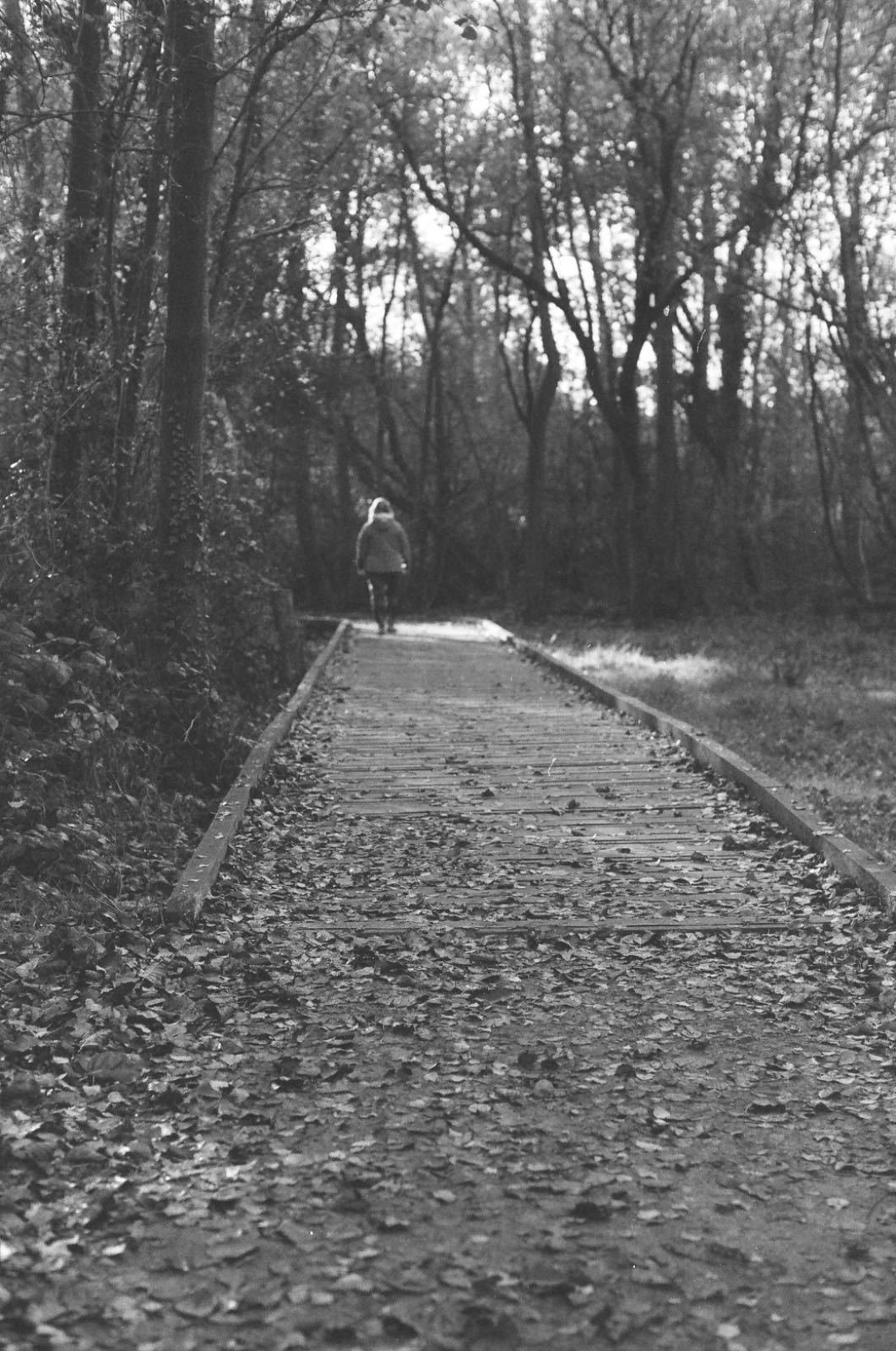
The body is no longer in the same position. We see different images, we walk on different surfaces, the air, the sounds and the smells change. And through this continuous change, a different experience is created:
“The world is not only where the thing that stressed me happened.”
Walking and the sense that there is a way out
When we are afraid, one of the basic things the organism looks for is the possibility of action.
Can I approach? Can I move away? Can I protect myself? Can I leave?
Walking is a very simple form of action. Every step is a small shift from “here” towards “there”. It does not solve the problem on its own, nor does it erase a traumatic experience. But it can offer the body a different sensory experience: I am not motionless, I have the possibility of moving.
This can be particularly important when stress has become associated with a sense of entrapment or powerlessness.
In a traumatic experience, this possibility of action can be interrupted. If the body perceives that there is no way to escape, to react or to protect itself, it may move into immobilisation or “freezing”. So one of the features of trauma can be that the body remains, for some time, organised around a sense of powerlessness and stillness, even when the threat has passed.
This is why, alongside psychological processing, physical movement can be supportive. Walking, gentle exercise, changing posture and, more generally, activating the body can offer a different experience: “I can move, I can act, I can shift position.” In this sense, the body can carry the emotion along with it, creating more space and mobility where previously there was stillness. This is not a substitute for therapeutic work, but a way in which bodily experience can facilitate and support it.
Where we cannot move psychologically through words, we can, for a while, manage it through the body.
Breathing changes when our rhythm changes
Walking is also connected with breathing and with rhythm. When we are anxious, breathing often becomes faster or shallower. The body is in a state of heightened readiness. This becomes especially pronounced in a panic attack, where breathing can accelerate significantly and become superficial. That change can in turn intensify bodily sensations such as dizziness, breathlessness or tightness in the chest, which may be read as signs of danger and feed the panic further.
Gentle, rhythmic movement, such as a walk, can help the body find a steadier rhythm again. We do not need to try to “drive away” the anxiety. It is enough to let the body move, breathe, and gradually experience that it can be in motion without real danger being present.
Sometimes it is enough to walk slowly enough that we begin to notice that our breathing is there.
So while anxiety pulls us towards “what will happen next?”, contact with our breathing can bring us back to “I am here, now”.
When we return to the present through the body
There is something deeply grounding in feeling our contact with the floor. The sole touches the ground. The weight shifts from one foot to the other. Muscles engage and release. We feel supported, at one with the earth.
When the mind is caught in thoughts, memories or scenarios about the future, attention can return through these simple bodily pieces of information.
How am I stepping? How am I moving? Where is my weight? What do I feel about the surface I am walking on?
This is not an attempt to “not think”. It is a different way of being in contact with reality: through the body.
Movement can help the gaze turn back towards the world around us
In a state of stress, our attention can narrow. We look for what might go wrong. We notice details. Body and gaze organise themselves around the possible threat.
A walk can offer the opposite: a space in which the gaze can gradually widen. Towards the sky, towards people, towards the shadows as we walk through side streets, the light between the leaves. Towards details we do not usually notice.
We do not need to force ourselves to “think positively”. It is enough to allow the gaze to discover that there are other things in the world besides what is preoccupying us.
Movement can give a feeling a shape
Not all feelings are made to be explained immediately in words. Sometimes we are angry and do not yet know what we want to say. Or we feel a sadness we cannot yet describe. Or a worry with no particular object.
The body can help a feeling move before we are able to understand it fully. Walking can give anger a rhythm. More vigorous movement can give tension an outlet. Gentle movement can accompany sadness without demanding that it disappear.
This helps us create a different way of living our feelings, instead of remaining motionless observers inside them. From “I can’t” to “I can do something”.
Perhaps the most important connection between body and feeling lies here. Stress is often accompanied by a sense of restriction: I can’t leave. I can’t change anything. I can’t react. I can’t stop what is happening.
Movement does not undo the reality of these experiences. But it can offer small experiences of choice.
I can stand up. I can change rooms. I can go outside. I can walk a little further or turn back. I can stop. I can change direction.
These small bodily choices can remind us that our body is not only a place where things happen to us. It is also a means by which we can act.
We do not have to “fix” the feeling
Perhaps this is why movement helps most when we do not use it as yet another obligation. Not every walk has to make us happy. We can walk and be sad. We can walk without having solved anything.
From “I am trapped inside this” towards: “I am carrying my feeling and I can move with it.” And perhaps this is one of the most important experiences the body can offer.
We do not always need to convince ourselves that everything is fine. Sometimes we simply need to give ourselves the chance to discover that there is also somewhere else.